There are some nice prices here on older physical version movies, TV shows and games over at iNetvideo.com, and there are some decent deals to be had so stock up while you can. I’ve ordered from them in the past and can safely say they do ship out quickly and pack well.
Here you go:
This slideshow requires JavaScript.
Blu-ray, DVD, Box Sets, and Games can be be had here at some very decent prices, plus if you want more news on future sales delivered to your inbox, feel free to sign up to get those alerts.
La calma prima della tempesta: Ray Milland as Inspector Thompson does a bit of gardening (sans FROGS to interrupt him).
Loosely based on a true story (that’s still a tad unresolved), Flavio Mogherini’s 1977 film La Ragazza Dal Pigiama Giallo (aka 1978’s The Pyjama Girl Case) is a pretty depressing flick to sit through when all is said and done. It’s skillfully edited to spool out two tales: one of a retired police detective (Ray Milland) coming back to work on the trail of the person who murdered and mutilated a woman, and the second is the story of Glenda (Dalila Di Lazzaro), a Dutch immigrant who comes to Australia, gets a job as a waitress and later ends up a victim of a particularly horrifying crime.
Even more horrifying are the police coming up with the idea to preserve and display the unidentified remains to the public (yes, this actually happened in real life for a whopping ten years) and painfully getting information though beating up a few suspects (not sure if it’s 1977 addition, but man, is it so not an OK thing to do even if a guilty party is eventually found). Nevertheless, Milland is clearly having a blast in his role, and Di Lazzaro is a lovely, tragic victim you want to see not a bad thing happen to. The film even makes you feel sorry for a suspect in her murder, but you’ll have to watch this to see how the director plays that out.
In fact, save for Milland’s Detective Thompson who’s eager to take on the case, most of the detectives and investigators here seem to be all too happy (and incompetent) with finding the quickest means to end the case, even if it means one seemingly obvious suspect is discovered early on who’s a pure creep and not a killer. This adds an air of hopelessness to the narrative as the film plays out and you witness the results of haphazard work (save for the one man who should be home with his flowers). Granted, poor Glenda would still be deceased even through the shoddy police work, as Detective Thompson is only called after she’s been disposed of.
Oh, boy. Severin Films has a nifty set of three horror-filled films you’ll want and a hell of a lot of ways to order them.
Here you go, in the speediest manner as possible. You get to do all the clicking and buying, I get to be as lazy as hell because it’s been a busy day and my poor wrists are giving out thanks to too much typing. Get ready to pick up some nicely restored vintage sleaze:
So sleazy, but you know that’s how you like it, uh-huh.
Looks like a fine day for a murder, no? Pamela Tiffin as the “lucky that the killer isn’t targeting her here” sometimes girlfriend in The Fifth Cord.
Murder most stylish, one would have to say about Luigi Bazonni’s (The Possessed) beautiful-looking giallo (brilliantly shot by Vittorio Storaro),The Fifth Cord from 1971. While the plot may be pedestrian, this is certainly one of the most fanciful-looking and visually well-conceived murder mysteries of the era if you’re into the artsy stuff and don’t mind a few plot clichés. The film has the basics you’d expect: a black-gloved killer with issues, a man who’s a suspect even though he’s got an alibi that’s more than solid, and a few suspenseful murders that have very nice scares (the ending is particularly frightening without being gory). There’s even a bit of tasteful nudity for the heck of it (also artistically shot and lit). I found myself captivated by the film’s visual style and way in which space is utilized throughout. This one’s a grabber from start to finish and yes, worth a watch for the art direction alone.
When boozy journalist Andrea Bild (Franco Nero) gets the call from his boss to investigate a man’s assault, he gets caught up in a series of serial murders after the killer promises to dispatch five victims before he’s done. All of the victims happen to be close to Bild in one way or another, so he’s a suspect (despite being drunk most of the time and out of place of the murders as the crimes continue). Speaking of out of place, the film does an outstanding job of presenting Bild as a man who seems to be lost in his surroundings but also angry at the powers that be who force him off the story at one point.
Grabbing Walter White is kind of a bad idea, heh.
This one tosses a few suspects at you from the get-go, but the true killer is a slight surprise if you’re not paying attention. Fortunately, this is one flick you can’t look away from thanks to how awesome it looks (you still might not figure out who the killer is until the end, though). The film has enough twisty mystery, some odd sexual content as a plot point (hey, it’s important to the story!) and a bit of violence that’s nicely handled throughout (you can watch this without hiding behind that trusty blanket you tend to whip out in some cases. What, you don’t have a Horror Blanket yet? Shame on you!).
It has the stylish looks and has a title reminiscent of a giallo, but it’s more of “a sexy drama with a shamelessly low body count”, according to a friend watching Luciano Ercoli’s 1970 film The Forbidden Photos of a Lady Above Suspicion/(aka LE FOTO PROIBITE DI UNA SIGNORA PER BENE) with me. Amusingly enough, this is someone who dislikes these types of films, but stuck around because of hearing it wasn’t a total gore festival. Shame he didn’t stick around for Torso, but we’ll get to that terrifying classic a few reviews later.
Dagmar Lassender is Minou, a pretty housewife with a pill addiction she can’t quite kick. She runs into trouble after a blackmailer (Simón Andreu) assaults her and alerts her that her husband Peter (Pier Paolo Capponi) has murdered a man and Nicola can help keep things quiet if she meets the blackmailer for, let’s just say some sexytime antics. She does, but things get weird and she calls in a free-spirited friend for some assistance. Uh, wait. That sounds a bit too much like a film with an X rating, huh? What actually happens is her loyal and sexually free as a bird friend Dominique (Nieves Navarro) has some rather shameless photos in her collection and Nicola notices the cad behind the blackmailing is the same in one of the photos… The plot thickens, right?
Well, not so much, folks. This certainly is a super-stylish looking film and yes, indeed, its ladies are stupendously as lovely as can be (the men, eh, not so much). However the suspense is limited to guessing how far the blackmailer will go when a few things are revealed and whether or not Dominque is part of the plans (because it sure seems something is up with her). With a few tweaks. “this could be a Lifetime drama of the week” (I don’t watch that network, I’m loosely quoting that friend from earlier, so I guess he or his wife are fans).
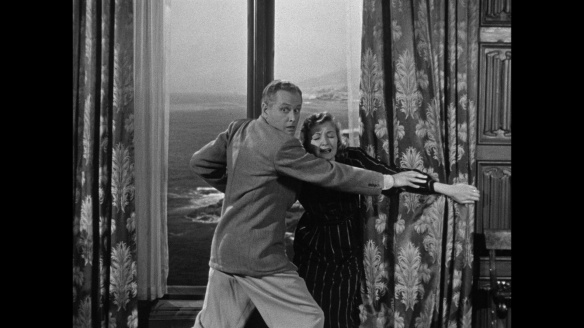
Deceptively beginning as a charming budget flick, Joseph H. White’s 1946 film noir So Dark The Night becomes so much its name as it devolves into sheer bleakness despite a fairly cliché-filled script. Without spoiling too much, its tale of a defective detective is a lot less Clouseau and a lot more Hitchcock as time goes on. But on a second viewing, it’s clear that the cheery tone the film begins with is a perfect setup to what’s to come.
When happy go lucky but weary Parisian detective Henri Cassin (Steven Geray) takes a much-needed vacation to a peaceful French village, a series of murders occur that has him using his years of well-honed skills to solve the crimes, but a proper solution escapes him until he realizes the shocking truth.
This corker of a thriller is expertly directed and shot, clocking in at a tidy 71 minutes has a few issues, but considering them in a film that looks so polished when judged in today’s terms, it’s a hidden gem that deserves a second look. Yes, some of the “Frenchiness” is stereotypical Hollywood and parts of the third act seem as if they come out of thin air. But when you realize what’s taking place earlier may be the results of a deluded mind (and excellent score), it all makes sense.
Don’t get pushy. mister. It looks bad to the hired help.
Clocking in at a taut 65 minutes 2 seconds, Joseph H. Lewis’ (Gun Crazy, The Big Combo) excellent low-budget sort of gothic noir My Name is Julia Rosswill keep you guessing until its very end. There’s a feeling of immediate regret for its lowly heroine (played by Nina Foch) as the down on her luck expatriate ends up taking a secretarial job that puts her life at risk as as she’s taken in by a crooked family that means to do the poor girl in. Why this is happening to her is a little mystery the film will have you wrapped up in for its entire running time and the conclusion closes a tight thriller in just about perfect form.
Julia wakes up with a new name and location wondering what the heck is happening and why she’s wearing monogrammed clothing with someone’s initials. We previously see all her items being trashed by her new “family”, so it’s a case of dread for her fate a few minutes in. Her sole out is perhaps a local gal who works in the mansion she’s trapped in who works as a maid, but even she’s not as sharp as Julia turns out to be at the end. Julia is initially a bit addled from the “medicine” forced into her tea every morning, but her determination keeps her from losing it despite her “mother” (Dame May Whitty), “husband” (George Macready) and a few others making her life a living (albeit luxurious) hell. Living there isn’t the worst thing for Julia… except for the dying part her kidnappers want her to play for real.
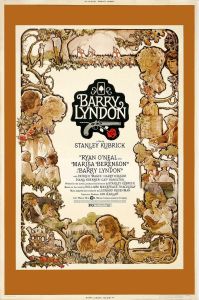
My first introduction to Kubrick’s Barry Lyndon was via the most likely means most 11-year olds with little to no interest in certain three-hour plus films made by somewhat visionary directors had at the time: MAD Magazine. I do recall that particular issue was confiscated from the classmate who owned it later in the day by a somewhat strict English (Literature) teacher who didn’t appreciate his not paying attention during her class. Fortunately, the magazine was returned the following day with a note that student had to take to his parents about his reading habits during class and oddly (or not so oddly) enough, a public library copy of The Luck of Barry Lyndon for him to read, write a book report on and return to the teacher. It turned out the teacher was a big fan of Kubrick’s film but had never read the MAD version, so she took it home, read it and liked the parody. Thus the somewhat unusual temporary gift and form of “punishment”.
You gotta love good teachers, friends. Go and hug one today (er, with consent, of course).
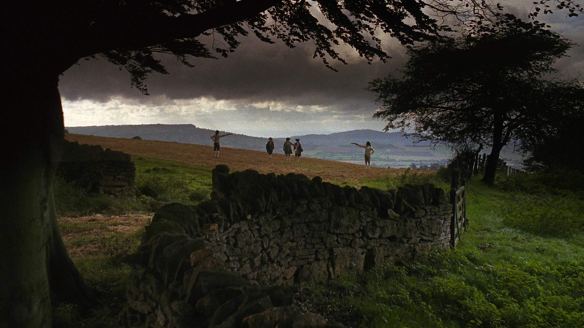
I’ve had the feeling for some time that I may have wished for such a tremendous fate back then, as it took quite a few years more for me to actually read the book Kubrick adapted and altered somewhat using groundbreaking lighting techniques and some of the most gorgeous and true to life costume recreations ever put on film. It’s also a film where you can practically hear its director chuckling as he reworked the book into his own style that in my opinion, fits in well with Thackeray’s original writing. Droll, deadpan humor is laced throughout the dramatic scenes, all of which are masterfully composed shots that may have you pausing the film to admire a landscape or painterly composition (of which there are many). Excellent performances from the cast all around also help, as does realizing that Redmond Barry (Ryan O’Neal) isn’t supposed to “act” here in the sense of a person throwing himself into a part and chewing up the scenery. He’s perfectly cast as a man in a particular point in history where both good to terrible things happen and he reacts as he sees fit (which isn’t always accordingly).
My exact expression when I found out Criterion was making a dream box set of mine come true.
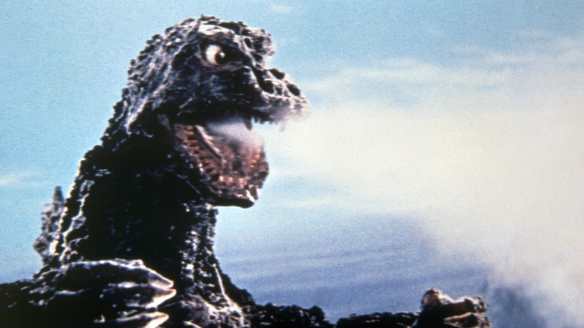
Wow. My wallet just jumped out the window when I saw that Criterion is issuing its 1000th set in glorious style with Godzilla: The Showa Era Films (1954-1975). The funny thing is, last month, all these flicks popped up on a cable channel and I caught most of them while wondering at one point if they were going to be fully remastered and *BOOM* – along comes this news and my wallet taking a dive onto the pavement. *Sigh*… it looks as if it’s time for another DAF game collection fire sale, as this one’s bound to sell out fast on the pre-order front and nope, I’m neither paying some ebay scalper way too much money nor holding out for the cheap knockoffs that will pack that site and fool a few folks thinking they scored a deal from some “clueless” reseller from overseas.
Color me and me inner eight-year old thrilled. Yours too, I’d bet.



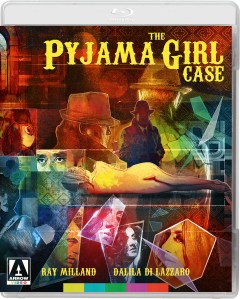 Loosely based on a true story (





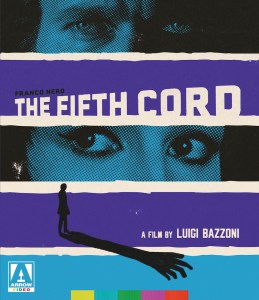 Murder most stylish, one would have to say about Luigi Bazonni’s (

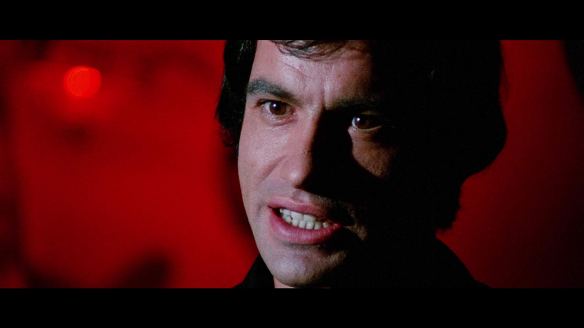
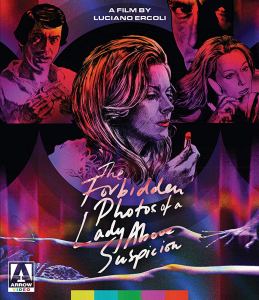 It has the stylish looks and has a title reminiscent of a giallo, but it’s more of “a sexy drama with a shamelessly low body count”, according to a friend watching Luciano Ercoli’s 1970 film

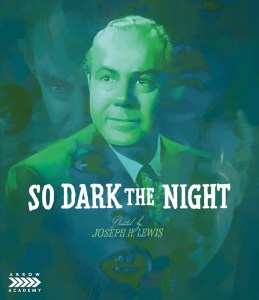 Deceptively beginning as a charming budget flick, Joseph H. White’s 1946 film noir
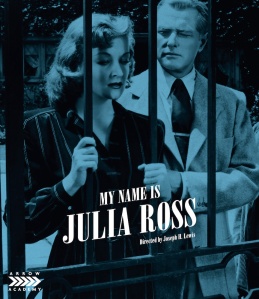 Clocking in at a taut 65 minutes 2 seconds, Joseph H. Lewis’ (
 My first introduction to Kubrick’s


 "DESTROY ALL FANBOYS!"