
 It’s a big, fat shonda that this 1973 comedy classic isn’t more easily available on home video here in the US. I saw it for the first time as a kid at the movies when it was initially released, then a few times on cable in the 80’s before it vanished. I’d thought it gone for good from circulation until I went to France in 1995 with a few friends and our luggage got accidentally put on another flight from Heathrow during the connection from New York (Oops!).
While waiting around the place we were staying for the airport van to arrive with our bags, I decided to turn on the TV just to see what Parisians watch when they’re not outside at some nice cafe sipping whatever and smoking Gauloises and people watching (which is a fine sport in Paris). Guess what was on? That’s right, and even more amusing, I found out soon enough that the film is something of a national treasure there. Even funnier was during the time I was in France, the two other times I walked past a TV that was on, the film was playing, which led me to believe that there was either a Rabbi Jacob channel running this on a loop 24 hours a day or whomever was in charge of network programming had a rather single-minded sense of humor…
Continue reading

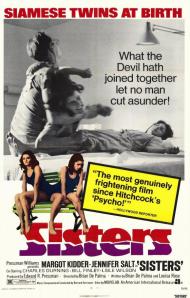 “There was NO body because there was NO murder!” is a great line, folks. Use it wisely, as it’ll either get you in or out of a lot of trouble depending on when and how it’s spoken. Anyway, I must be losing my mind because I really thought I did this one as a RFoTW already. But it was either a dream I had about writing it up (hey, it happens every so often!) or perhaps I’d referenced this great 1973 flick in another film article from a while back.
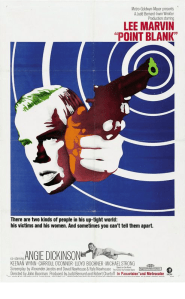 Forget that offbeat poster to the left, all the film’s stylish narrative tricks and fine ensemble cast doing some stellar work, folks. There’s one obvious moral to John Boorman’s Point Blank that seems to have escaped nearly everyone who dies in this film. That would be the following: If you owe Walker $93,000, stop talking so damn much, pay the man and stay breathing a bit longer.
 If you want to get your friends into classic movies, there are three ways to do so. Kidnapping them, strapping them to a chair with eye clamps and locking them in a room with a TV locked onto Turner Classic Movies isn’t quite the best idea, nor is lecturing them about how all modern films are terrible compared to everything pre-code or up to say, 1959.
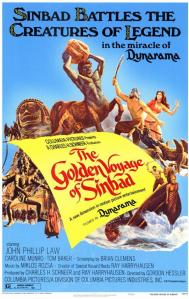 Ha! Motivation-killer flu, you can’t keep me from posting! Anyway, onward! It took Charles H. Schneer and Ray Harryhausen fifteen years to follow up their classic fantasy film The 7th Voyage of Sinbad with the second of three movies starring the fabled sailor and The Golden Voyage of Sinbad both looks and feels almost as timeless as that first adventure.
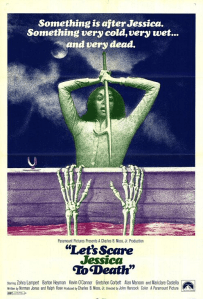 While I was too young to see this one in a theater during its initial run, I do recall the poster giving me the creeps whenever I saw it in a subway station back then. When it turned up on TV a few years later as an ABC Sunday Night Movie, I can recall watching it and being to scared to stick around for the ending, but not being able to move from my spot in front of the TV. I don’t recall whether or not I slept that night, but I think I was not good for much for a few days afterward.
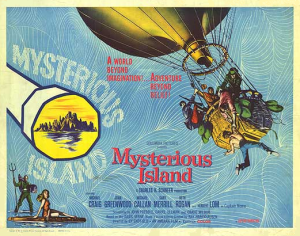 Yet another Charles H. Schneer/Ray Harryhausen production featuring a brilliant Bernard Herrmann soundtrack, 1961’s Mysterious Island is another classic fans of the master stop motion animator cite as some of his best work of the decade as well as a pretty solid genre entry. It’s certainly got a nicely varied cast of creatures going for it from a giant crab, an very angry and huge prehistoric bird, a few huge bees in their cliffside hive and a majorly over-sized cephalopod near the end. You also get a nice balloon escape at the beginning that gets most of the cast to that titular island, a few ladies tossed into the mix courtesy of a shipwreck and a surprise appearance by Captain Nemo that adds another layer of the fantastic to the film…
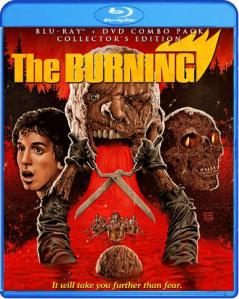 Man, I haven’t seen
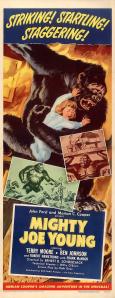 With Ernest B. Schoedsack’s 1949 film Mighty Joe Young, stop motion animation fans saw the torch passed from the past master of the technique, Willis O’Brien to his willing, eager and more than able apprentice (and future master), Ray Harryhausen. Where 1925’s startling The Lost World and 1933’s epic King Kong helped pioneer stop motion (and its more comedic sequel, Son of Kong added a neat dinosaur chase scene to the list of O’Brien’s classic scenes), Mighty Joe Young was pretty much Harryhausen’s film from start to finish.
 Eeek! I don’t know what’s more frightening: the fact that there are actually dolls based on Alfred Hitchcock’s seminal horror classic
 "DESTROY ALL FANBOYS!"