Review: Scandal (1950)

Yes, it’s a Christmas movie.

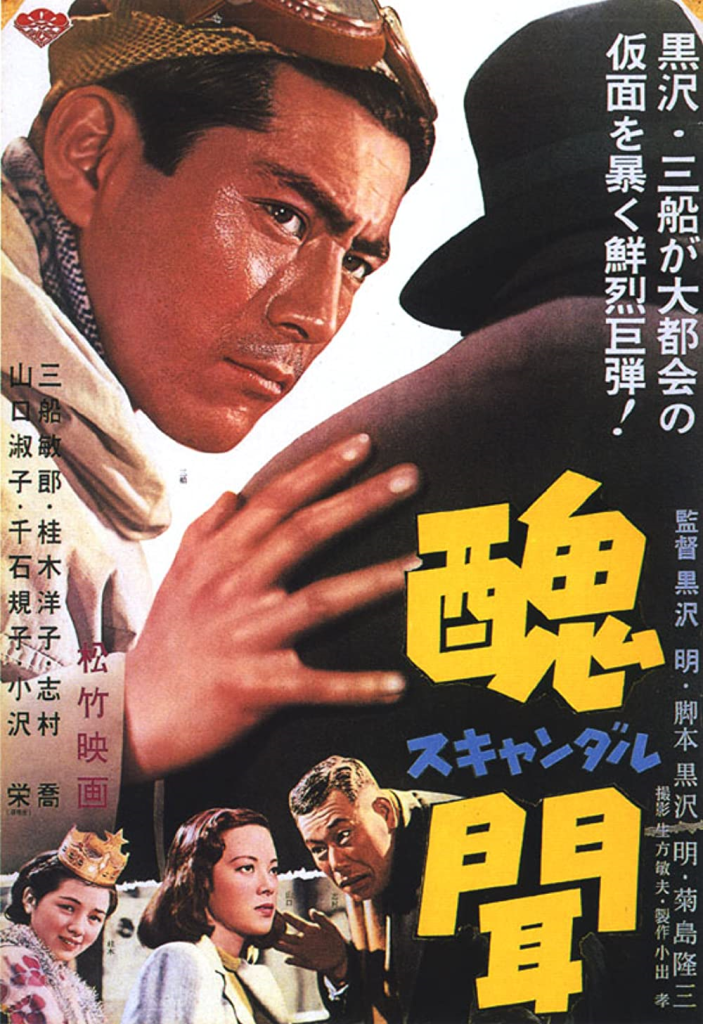
All Ichiro Aoye (Toshirō Mifune) wanted was to get his latest painting done while up in the mountains. But a chance encounter with famous singer Miyako Saijo (Shirley Yamaguchi) leads to an innocent motorbike ride past a bus with a pair of nosy magazine photographers looking for an exclusive interview with her. They don’t get it, but manage to snap the two seemingly sharing a room (they’re not). Once the photo arrives back at Amour Magazine, a salacious story gets written and both Ichiro and Miyako deal with the resulting fallout, even though they both temporarily benefit from career boosts due to the resulting gossip.

Thus begins Akira Kurosawa’s Scandal, which manages to poke a finger in the eye of celebrity worship and the often lousy and slanderous “journalism” that comes with it. The film is also has bits of comedy, does double jury duty as a decent courtroom drama and you’ll also find the old heart string tugboat towing the SS Kleenex for good measure. There’s a big slice of mundane, but honest sentimentality here that still resonates more with age and for me, it’s Kurosawa’s most “American” film, despite the Japanese setting.

in Japan, extreme painting is a spectator sport.

Ayoe goes to the magazine’s office, slugs the article’s writer and tells them he plans to sue. Later, he’s approached at his home by a somewhat disheveled lawyer, Hiruta (Takashi Shimura) who gives him his business card and asks to represent him at the upcoming trial. Ayoe says he’ll give it some thought, but his friend Sumie (Noiriko Sengoku) comments on Hirata’s smelly feet and warns Ichiro about his choice. The next day, Ichiro visits Hirata’s rundown home to accept but meets his bedridden young daughter, Masako (Yōko Katsuragi), who’s had tuberculosis for five years, but still greets him with a joyful smile and shows Ichiro what’s currently keeping her happy: an intricate wedding outfit her mother has made that’s to be delivered the next day to a future bride. That old tugboat is puffing out gently scented tissue smoke right about now.

I am the law?

Inoue also stops by Hinata’s cluttered “office”, a tiny shack on the roof of a building that looks as it it was built by the lawyer himself where he finds some bike racing forms and a photo of Hinata’s daughter tacked up near the door where she’s standing up and still bearing that warm smile. Ichiro leaves a chalkboard note saying he wants to retain the lawyer and leaves. The film gets busy touching on that period between Christmas and New Year’s Day where there are some laughs to be found and you realize that drunken revelers are the same almost everywhere. Hinata’s plans to one-up the magazine by secretly revealing his trial plans to its shady publisher backfires badly and he eventually takes money to gamble on the races, where he seems to keep losing.

See, I told you this was a Christmas movie!

Everything culminates in quite the ending that’s guaranteed to get that tugboat huffing out more tissue smoke of course, but with Kurosawa, it’s in for a penny, in for a few pounds. there are a few ways to watch this from poorly subtitled versions posted online to the far superior Criterion Collection box set you can get here that gets you five of the director’s post World War II films. Whichever way you choose, you’re in for quite a holiday.

-GW

Review: Once Upon A Time In The West

They don’t shoot horses, do they?

An intentionally slow moving, deliberately paced epic “western opera”, Sergio Leone’s now classic Once Upon A Time In The West wasn’t exactly a huge hit back during its 1969 North American release. The film, which was edited for some content (since restored) was probably still somewhat lengthy for audiences of the era and the film’s somewhat glacial pace will be a bit much for some new and impatient viewers.

Interestingly enough, the film is a sweeping and meticulous love letter to the western genre, featuring major and minor visual and aural tips of the hat to many previous westerns. It’s also Leone doing remarkable work with his camera using carefully crafted sets and locations in Spain and some prime locations in Monument Valley to grand effect. There’s also spring loaded tension throughout, such as the brilliant opening sequence where three duster-clad gunmen wait impatiently for a late train to arrive just so they can kill a man (Charles Bronson). Leone uses some humor here to break that tension, having a common fly and dripping water torment two of the men as they wait.

No, he doesn’t do requests…

The would-be assassins fail, save for wounding their target and the film cuts to a man named Brett McBain and his young son hunting birds before taking their catch back home to a ranch named Sweetwater, where the entire McBain family is in turn brutally dispatched by a man named Frank (Henry Fonda!), Then we move to Jill McBain (Claudia Cardinale) arriving via train to the town of Flagstone, where no one is there to meet her (thank to Frank and his men). After the buggy she’s hired to take her to her new home makes an unscheduled stop, we then meet Cheyenne (Jason Robards), an outlaw who’s just escaped from jail and ends up at that spot where he meets his gang. Cheyenne meets a recuperating Bronson, who he dubs “Harmonica” upon seeing and hearing him play while wondering if he can shoot as well. Harmonica initially thinks Cheyenne sent his three of his men to kill him earlier because of the dusters they wear, but he’s soon convinced otherwise. Jill eventually makes it to her new home where we see the bodies of the family laid out and a small group of neighbors waiting to give her the sad news. Before the funeral, evidence of Cheyenne’s involvement in the murders is revealed, but Frank is actually responsible.

The next time he rode a train, he made sure no one would shoot him.

It turns out Frank is working for a very wealthy man named Morton, who’s got a disability and travels in a specially customized train. Morton admonishes Frank for killing the family instead of scaring them off, to which Frank coldly replies: “People are only scared when they’re dying”(ouch). Morton wants Sweetwater for its proximity to the railroad and its water source, both of which will add to his wealth, but he doesn’t realize Frank also has his own plans for the property. Meanwhile, Jill is the sole owner of Sweetwater now that her family has been killed and yes, Frank has plans for her as well. Both Cheyenne and Harmonica figure out what Frank is up to, but both men have their own plans for dealing with him and fate also drops into the picture. The theme of water plays so heavily here that I thought of Chinatown for a moment once the overall story was finally revealed. This is a film that takes its sweet time to fully display its plot, using Bronson’s character as the near-silent observer/detective and his reason for being a bit vengeance minded is finally revealed after a trio of initially hazy flashback sequences are spread throughout the film that eventually tell a tragic tale.

John Ford was here…

There’s a lot more, but we’ll talk instead about how Leone’s superb attention to detail in everything from the sets to costumes to his work with composer Ennio Morricone that make this a film worth watching. The scope of the film is constantly amazing down the finest details to the dozens of extras in full costume for a single scenes. Jill’s arrival in Flagstone goes from crowd shot to crane shot to show of the dusty non-splendor of the growing railroad town and as expected, Leone gets in some truly outstanding closeup shots. Morricone has a theme for each of the four main characters and there’s a few uses of sound design in lieu of score, like how the film opens using a mix of insects, a constantly squeaky windmill and other amplified bits. The film stretches scenes and can be deliberately confusing in spots, but that’s Leone wanting viewers to figure out things out as Harmonica does.

Oh don’t you know, that’s the sound of the men working on the train gang?

In other words, take the time to watch this and you’ll be surprised at how well this film works not only as western, but also as a homage to other past westerns. Hey, if you sat through a three hour Batman film, this will be a cakewalk, right? Cheyenne says make a fresh pot of coffee and have it handy (you’ll get the reference from watching the film). by the way, this post is part of The Foreign Western Blogathon hosted by Moon in Gemini. Pop on by and take a peek at the other submissions for other genre faves!

-GW

Review: Nostalgic Train (PS5)

Or: The small, strange town and its iron horse.

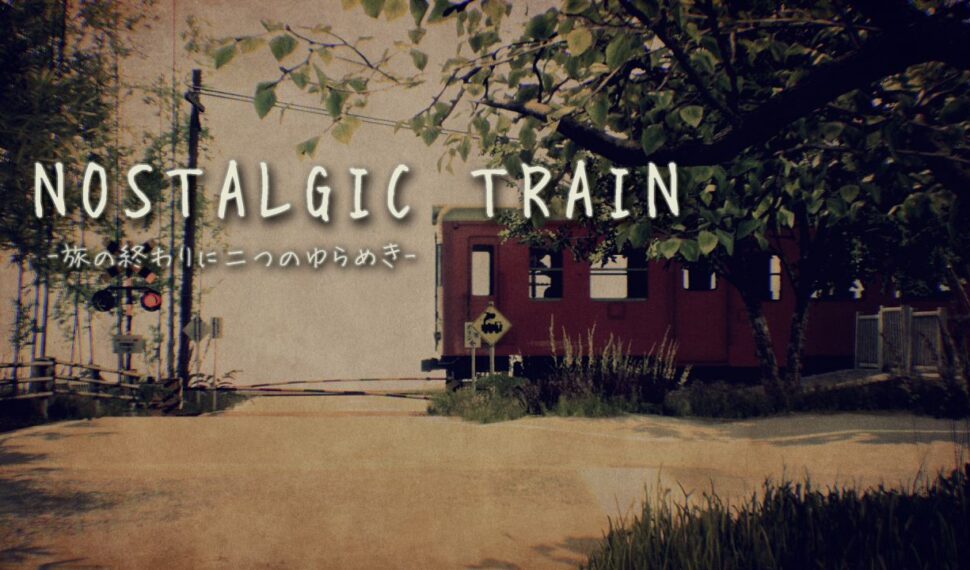
Personally, I’m not a fan of the term “walking simulator” that’s often used with derision by some players about short, mostly first person game experiences that focus around slower, careful movement and exploration, yet that term perfectly describes the lovely, melancholic Nostalgic Train ($13.99), which is available on consoles and PC. The Unreal engine game was created by a very talented solo developer named Tatamibeya and just so we’re clear, the game’s description of itself is “Two fluctuations at journey’s end – Beautiful countryside novel and walking simulator.”

There’s also a bit of a mystery with some semi-supernatural elements and even some time travel tossed into the mix, but the game is actually a text-based record of the town’s origins using a few life stories and key events scattered over a few centuries. The game starts off as its sole playable character wakes up in the tiny (and fictional) Japanese village Natsugiri, which is entirely vacant save for the sound of cicadas, dandelion seeds floating about and the scent in the air of mystery. As you walk around, you can use R2 to reveal glowing orbs that reveal more of the story and lead you to the next hint and more of the story. Visually, there’s a solid sense of reality in the visuals, but I can imagine some players used to ray tracing and other effects griping that certain elements of the game aren’t realistic enough. Whatever, it all looks like a series of gorgeous postcards in my book.

Life is but a dream…

This guided experience format works well for the most part. It makes the game playable by anyone, provided they love to read and can activate their imagination during certain sequences. As you explore the village, you’ll come across some items that need to be used to advance the story. For example, early on you find a discarded life preserver near a schoolhouse by a lake. Touching it reveals a past memory of a child picking it up to attempt to rescue another child which soon turns fatal for one. At this point, the formerly inactive train’s chime starts sounding and that’s your clue that you need to get back to the station and take a ride.

In true Twilight Zone fashion, you end up back at the station and yep, you need to R2 yourself back to find out what’s transpired. The entirety of Story Mode is like this, so it’s almost impossible to get lost. The village is so small, that you can spend maybe less that five minutes walking around if you’re not using the hint system. The story gets more fascinating with each chapter as you’ll encounter others who need assistance, but the village remains empty as you only read about your encounters and have to imagine past, present and future encounters, just as if you’re reading a book. The story takes a few dark turns as it continues and you find out your character simply trying to find out who and where they are and travel back to what’s seen as “normal’ reality can’t keep you from uncovering what’s going on. In fact, there’s a link to everything and the constant cycling back to the village the train takes is somewhat important. Or: “You can check out anytime you like, you can’t ever leave (guitar solo not included)”.

Bring you walking shoes, folks…

There’s also a Free Mode where you can stroll around and find glowing orbs that reveal some historical and other bits and (if you’re a completion fanatic) nab that Platinum trophy. This won’t take long at all, but I’m guessing based on the completion stats I’ve seen, some players haven’t done this yet. Well, it’s certainly not for every taste, but it’ll stick with you like warm summer wind. Cicadas are harmless, by the way and with all those dandelion seeds blowing around. I’d guess you can pocket a few to remind you of this short trip you’ve taken. Recommended.

-GW

For Medicinal Purposes Only (Or: Some Capsule Reviews)

In short, where to start other than listing a few flicks that were to me, enjoyable to the point that they’re not any longer (warning: opinions ahead!)

Almost, but not qu(EYE)te…

The Hypnotic Eye (1960) -Slick but eventually overcooked semi-horror about a suave, heavily accented hypnotist (Jacques Bergerac) and his curvy assistant (Alyson Hayes from Attack of the 50-Foot Woman) who seem to be responsible for 11 women mutilating (or killing in one case) themselves with no memory of the incidents afterward. The film kicks off with an amazing and horrific opening, but has to feature possibly the dumbest detective on the planet who allows his girlfriend to act as Hypno-bait for too long to the point of disbelief.

The film starts out strong, but the denseness of the detective and his way too clueless nature hurts the proceedings as it plays out. That said, there are a few high points, such as the interviews with some of the disfigured victims that show off some disturbing makeup, the always pneumatic Miss Hayes and this particular scene, which some of you movie lovers might find yourself identifying with somewhat:

It’s hip to be square.

Things fall apart with a nutty mass hypnosis scene that’s amusing, yet takes a bit too long before motives are revealed with an ending that includes a pretty cheesy makeup job (is that an oatmeal mask left on too long?) and a corny PSA about hypnosis. This one falls into the “Oh well” pile by the time it’s over, but at 79 minutes, at least it doesn’t overstay its welcome. If you’re very sensitive to flashing lights, you might find yourself under it’s spell a bit- just don’t attempt to wash your hair or drink coffee afterward.

“Muthers?” This one made me say “Uncle”

The Muthers (1975) – Thanks to a relative who took me to the movies as a kid, I have the distinct memory of seeing the trailer to this film and it stuck for decades until I finally caved and bought this DVD from Vinegar Syndrome last year, and found it to be somewhat lacking after the fact. Sure, it’s a Z-grade exploitation film and yes, it’s got that going for it from the start. But I actually fell asleep the first time I watched and had to sit through a second time just so I can write that it was actually watched this to the end. And NO, it certainly did not get better the second time around.

Directed in the Philippines by Cirio S. Santiago, this is kind of enjoyably junky if you just turn off your brain and wallow in the film without judgement. On the other hand, there are far better films in this sub-genre that are worth watching than this clumsy, cheaply made affair with its crummy excuse for martial arts and loads of gunplay and explosions. Amusingly enough, I recently found out it’s one of Quentin Tarantino’s favorite films, which makes me think that perhaps he should have just made a Fox Force Five flick during his Grindhouse period. Or hell, got a limited TV series out of a those few lines of dialog from Pulp Fiction. I had to dig out a Jack Hill film from the collection just to wash my brain rid of this mess, so I got to see The Swinging Cheerleaders rock this film’s world.


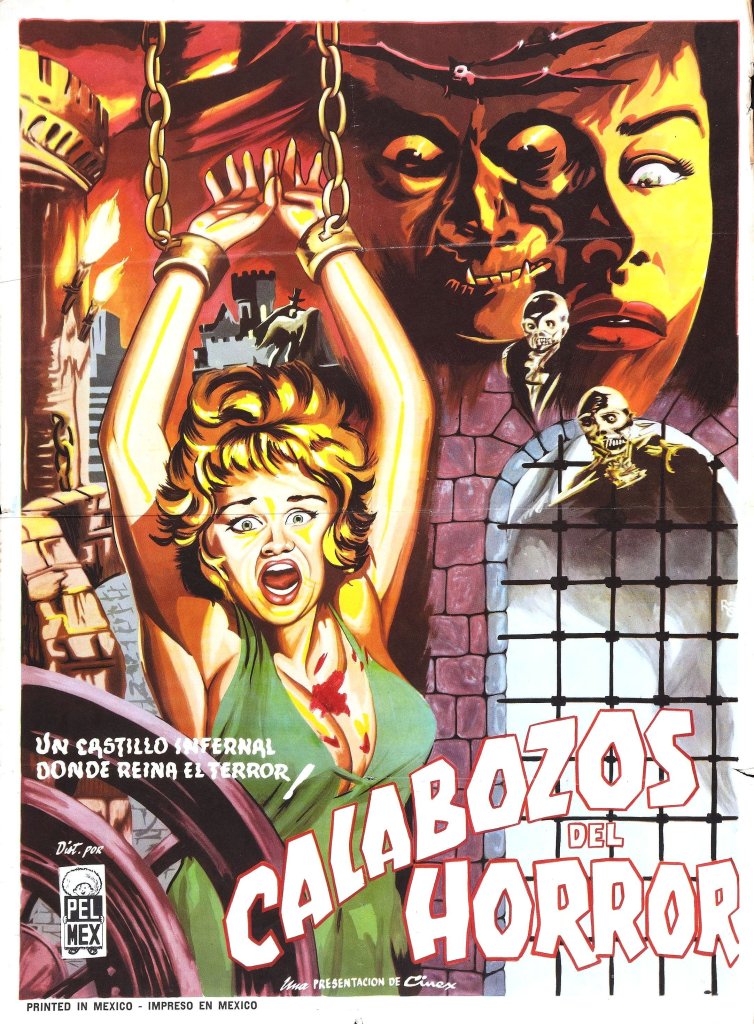
Esta pelicula es pura basura!

The Dungeon of Harrow (1962) – Let’s just say that while the late Pat Boyette was a great comic artist of the era and beyond, his sole directorial effort, the dreary gothic leper flick presented here ends up being as bargain basement as it gets for a “horror” film. The only good thing about this Vinegar Syndrome release is it comes as a double feature with Death By Invitation, which has its flaws but it’s a great deal more watchable than what’s here. Granted. this falls squarely into “cult classic” territory, but the dreadful pacing here makes this a total chore to sit through. When I lent the disc to a friend recently, he returned it while waiting downstairs in his car while he flew the disc upstairs using a drone he purchased. There was a note inside the DVD case stating that the both films were shown to a group of seven and people could barely make it though the main feature.

Must be a death cult. “Classic” my a$$.

Let’s see now: two survivors of a shipwreck have to deal with everything from wild dogs to the creepy Dracula impostor and his dressed for the wrong movie bodyguard. There are two women also trapped on the island, but the whole film looks as if someone went through a random pile of clothing as a Salvation Army, chose the cheapest outfits and made up a plot as they shot. Amusingly, trying to describe the plot is somewhat futile, so this capsule review may actually do the job of selling a handful of copies if anyone is THAT curious. Hey, it’s your money and time, folks. These aren’t exactly bucket list films, but I’ll take one for the team every now and then, Hey, I think I hear some film noir calling me – back in a bit with some other stuff.

-GW

Oh, WordPress is ticking me off because it sometimes won’t allow me to add tags until AFTER a post is made, so I’ll be re-editing this later!

The Gift Or: “Where’s Waldo?” Or: “Really Dead Letter Office”

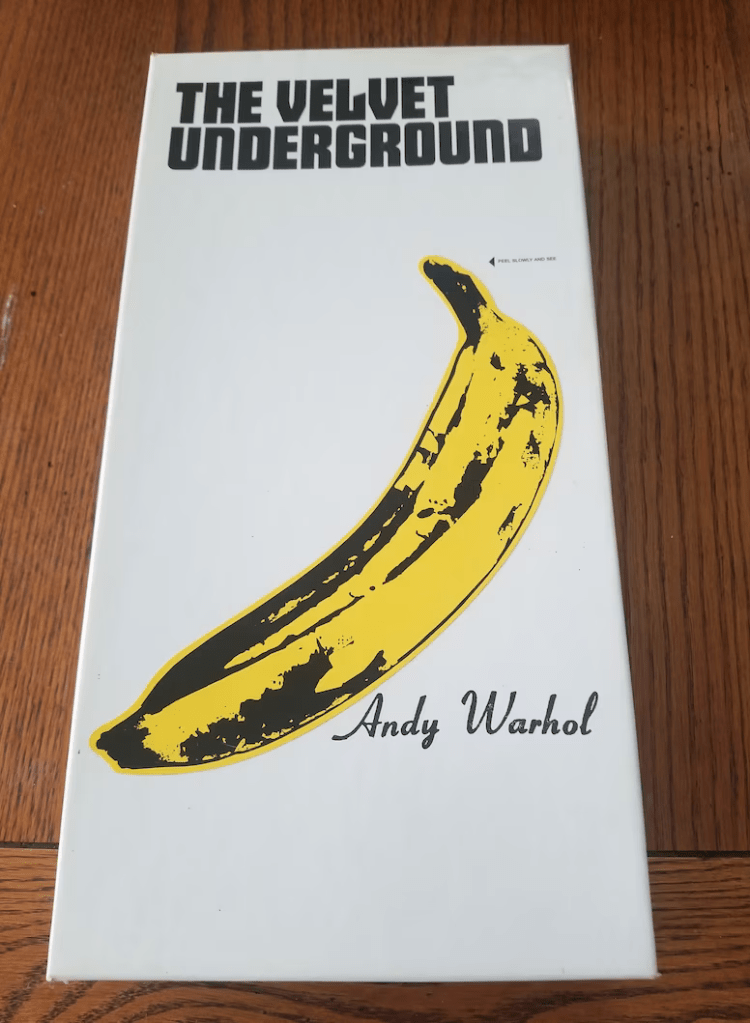
I blame the banana.

Okay, I’ll admit my choice in multiple titles is directly inspired by watching way too many Rocky & Bullwinkle reruns as a kid. But in this case, every chance at humor is a spoonful of sugar in his particularly grim musical case. I first discovered The Velvet Underground’s now classic 1968 album White Light/White Heat on cassette sometime in the early 80’s, but I only barely managed to make it through the first side before tapping out. Between what I thought bask then were some intensely downbeat lyrics and very heavy use of feedback throughout the album, at that time, I wasn’t quite ready for that aural assault (and I hadn’t even heard of Metal Machine Music at that point!).

Flash forward to 1995 and I’m in a record store that was running a closing/closeout sale where I spy the Velvet Underground box set Peel Slowly and See for under $10. I ended up grabbing that, the James Brown box set Star Time and the Little Richard set The Specialty Story all for $20 new, with the cashier rounding the total down because she ran out of change. In any event, the second time was the charm thanks to a few years of broadened horizons and it was when I re-listened to The Gift that I developed a better viewpoint of the band’s output. All I’ll say is that it’s based on a college writing exercise by lead singer Lou Reed, was recorded using a stereo mix that separated the music and vocal tracks (which works quite well when using headphones) and it’s got a killer ending, courtesy of a creative suggestion by Frank Zappa during the recording process.

Not counting the many live concert versions, The song exists in stereo, mono, vocal only, instrumental only, and live instrumental recordings. Take a listen to two of those (or just one, if you prefer your music sans very fuzzy intentional feedback):

Not based on a true story.

And here’s the vocal only version, although I’ll admit without the fuzz, it sounds like a somewhat more frightening campfire story, especially with that well-timed sound effect at the ending.

Still not based on a true story!

Yes, it’s a bit on the macabre side (and how!), but it’s also darkly amusing what with John Cale’s absolutely deadpan reading of Reed’s story. On a side note, YouTube actually has a Lego version of the song that’s definitely not for kids (like the song), uses a live concert version of the tune and yes, here’s a link if you want more: https://www.youtube.com/watch?v=y5I43qhtd1M . Er, don’t say you weren’t warned. Although, my overall opinion that a minor issue with the song is the whole Show Biz Bugs nature of it, where if you listen to it once, the shock value diminishes significantly on a repeat. That said, this may be a one-trick pony, but you’ll want to at least ride it through that flaming hoop one time just for that splash in the pool at the end of the jump.

This is another post in Travel Gone Wrong Blogathon, hosted by 18 Cinema Lane. See a list of the assorted entertainment covered in this event HERE!

-GW

The Passenger, Or: Boarding? Pass!

Long story short department: Way back in late 1983, I recall popping into a local record shop looking for a few new soundtracks or whatever else caught my eye(ear?) and at some point as I was poking around, the cover to this record jumped up and bit a small hole in my wallet (I think I spent around five bucks on it):

Woof. Just keep telling yourself “It’s only an EP, It’s only an EP…”

Truth be told, I was a bit of a WOV fan, having picked up both of the group’s studio albums Dark Continent and Call of the West along with the soundtrack to Urgh! A Music War, which I picked up after seeing that wild concert film here during it’s brief NYC run in 1982. Although initially released in 1980,This particular EP was new to me and I recall a clerk in the shop noting the shop had recently restocked a few copies after the initial run sold out, so this was snatched up and paid for right away.

I didn’t get to listen to the record until a few hours later, so the first play was sometime at night with a pair of headphones on and lets just say, things got interesting as those six tracks played. For starters, the first track, “Longarm” was an amusingly quirky diversion with lines about a 58-hour week and a workforce soon to be replaced by machines. However, the next song was in a way, somewhat less amusing and a bit more haunting. “The Passenger”, a catchy song/story about (of all things) a doomed airliner’s tragic last flight was up next and man, talk about “Nightmare at 20,000 Feet”, folks. It’s all in the lyrics and delivery with one.

In my mind at that time, the song almost seemed like it was the one was playing inside D. O. Guerrero’s head as he ran to the restroom to set off his bomb in the film Airport. I can remember once thinking that if someone were ever to remake that film, there’s your main theme right there, although the song uses a different final stop (“Polar route, destination: oblivion”) than that film’s Rome. Or perhaps it might have made for a somewhat depressing way, way (way!)-Off Broadway musical, if someone were to actually write a book for a show that might only run less than a week, including previews.

That song jammed itself inside my head for years at random intervals and I recall when I finally took my first plane trip back in 1992 (Hawaii, If you’re curious), yes indeed, that tune was an unintentional part of my internal soundtrack for the long trip. Granted, some real-life turbulence and a wild ride through a storm on the long second leg of the trip where we bounced around over the ocean like an airplane model on visible wires in a badly made pre-CGI movie almost had me thinking this might have been a trip to a different sort of Paradise. Let’s just say that I ended up making myself laugh on that last leg when a certain Ohio Players tune popped into my head suddenly.

Since you asked (I hope), The rest of the EP is fine, with an excellent cover of Johnny Cash’s Ring of Fire that morphs into the Jerry Goldsmith theme from Our Man Flint midway with a ton of feedback as a finale, “Can’t Make Love“, a somewhat relatable ditty about relationships, “Struggle” which, with all the gasping going on sounds like a brief soundscape from a giallo or some other tense fright film. Finally, there’s the rather unsettling “Granma’s House“, which is just 1:21 of a ringing phone backed by a metronome-like heartbeat sound and perhaps, iffy memories if you take in the atmosphere too literally. Speaking of phones, someone please call David Lynch circa 1977, as that track also sounds as if it would be at home in something like Eraserhead. To be fair, the group also (and often) dipped into humor, like somehow making a pesky Tsetse Fly or even an Invisible Man a lot less threatening (but still scary in a way). And (much longer story short) we wouldn’t have Stan Ridgway’s wonderfully varied output without that best version of the group.

While you can download the entire EP online. I’d highly recommend the larger The Index Masters collection as you get more of WOV’s unique mix of soundtrack-flavored music, including a few live tracks. As a personal preference, I liked the group’s output through 1982’s Call of the West, which gave them “one hit wonder” status with Mexican Radio. On the other hand, if you listen to the band’s output from is late 70’s demos up to that point, you’ll hear more than a few tunes that really make themselves stand out with their unique blend of musical influences.

This post is part of the Travel Gone Wrong Blogathon, hosted by 18 Cinema Lane from April 29 to May 2nd, 2022. You can see a list of the films covered in this event HERE!

-GW

Upcoming: “You’ll Hear The Drums & The Brush of Steel”

“There’s only ONE way to deal with tumbleweeds”

Well, that’s more than enough time to give the Blu-ray of Sergio Leone’s rather epic western Once Upon A Time In The West I just ordered a spin or three for Moon In Gemini. I may try another, as the subject this time is more than broad enough to perk my interest in contributing a few reviews. Better yet, I’d bet a few of you out there that blog a bit on film may want to get in on this as well. Side note: I’ve actually scribbled a few reviews in the past on certain films mentioned on Debbie’s site, so feel free to check out my takes on Outland, Battle Beyond The Stars, and Day of Anger, if you like.

-GW

Accent Grave, Over the “E”, Or: How Not To Watch Some Films, Sometimes

Well, in short, I caught The French Dispatch on cable before I finally saw the Dune remake and yep, as both films demand multiple views to catch every bit of detail one fine film kind of unintentionally and amusingly ruined the other fine film within seconds. Almost as soon as Timothée Chalamet appeared onscreen as Paul Atredies, I started chuckling, not because there’s anything resembling a poor performance in either film, but I actually wondered at one point how much more visually out there Dune would have been in Wes Anderson had directed it. Not to throw any hint of shade in Denis Villeneuve’s direction at all here as both directors’ work feature meticulous attention to detail along with strong performances. However, I kept thinking while watching both films how Anderson’s use of numerous film techniques would work within Frank Herbert’s worlds.

That or hell, the title to this article partially references one of my favorite comedies, 1940’s The Bank Dick, and part of me wants to see a Wes Anderson version of that at some point, But I’m a bit nuts these days, so file this thought under really wishful thinking, I guess.

-GW

A New Year, If You’ll Have It

Hi There.

I’m mostly back (mostly) and Happy 2022, folks – let’s have some brain clearing music for a spell:

Well, it works for me.

OK, moving on. There’s a weird bit of content coming, so bear with my probably slightly entertaining psychotic ramblings for a bit. Last year was a bit of a corker for me (and hell, just about everyone else!) but we’ll try to post more headed forward. I’ll poke around in my drafts and knock out some ancient stuff that I started last year while the old grey matter percolates some newer content (mostly). Alrighty then- I’m off to watch a few movies to subtract from my bucket list- it’s a dreary enough day today to warrant such behavior and I’m sure laying low like this is good for one’s mental health, right? Er. don’t answer that.

GW

Review: Gleylancer (PS4/PS5)

probably the sole good use of the word “Pow-Wow” these days.

While the SEGA logo is nowhere to be found (they only published the game way back in 1992), Advanced Busterhawk Gleylancer looks, feels and plays like it’s 1992 and that’s a great thing. Ever busy publisher Ratalaika Games and veteran developer Shinyuden go above and beyond the call here with a flawless English translation plus a slew of gameplay improvements that range from a horde of video customization options to some all-new game modes that make this an instant buy at its low $6.99 price point (the original Mega Drive version will set you back about $200, and yes it’s solely in Japanese).

The game is pretty story driven with a lengthy opening movie, but in s nutshell: The story follows Lucia, a 16-year-old star fighter pilot in the Earth Federation. A war breaks out between humans and an unknown alien race in the year 2025. Lucia’s father, Ken, a high-ranking admiral in the Federation Navy, is captured after his ship is warped out of the combat zone with 4 alien modules which have the ability of teleportation.  Lucia, heart-broken after hearing of her father’s disappearance, decides to hijack the prototype fighter CSH-01-XA “GleyLancer” with the help of her friend Teim and go after her father.

Like any decent classic shmup, a good player will complete the game in under an hour, but a smart player will deep dive this and go back for more and unlock every trophy. The fast but methodical gameplay is also customizable to the point of letting players cheat right off the bat if they so desire. There’s also a handy rewind function that’s excellently implemented and like the cheat mode, optional. The really amusing thing here is very likely, a good deal of modern gamers may not have heard of this until this release and may automatically snap it up for the quick trophies Ratalaika games are known for. My bet is they’ll be surprised at the challenge the game presents on its standard mode.

Just another day at the office…

I have no idea what Shinyuden has planned for the future, but there are a ton of other shooters for the Genesis out there that can use this sort of very proper localization. I can name way too many here, but let’s not go over the moon with wishful, wistful thinking just yet. Recommended!

-GW