 Platform: PlayStation Vita
Developer: Game Arts
Publisher: Xseed Games
# of Players: 1 (online 1 – 4)
ESRB Rating: T (Teen)
Score: A- (90%)
 Another key Vita game hitting stores and PSN at a prime point in a pretty busy year, Ragnarok Odyssey is one of the better JRPGs on the handheld thanks to addictive, fast-paced gameplay, plenty of tough enemies in offline single and online multiplayer modes and lots of lovely visuals and sound to groove on as you play. The game clicks in just about every area and fans of Ragnarok Online and the under-appreciated Ragnarok DS will be pleased to know that the game has enough familiar elements that it feels like a natural extension of those games that can be enjoyed on its own merits. The game is so good that the only major flaws here are some lock-on issues and the lack of a PlayStation 3 version or the ability for Cross Play functionality. The PS3 could use a decent new MMO/Action RPG experience and this would have been superb had GungHo Online and developer Game Arts seen fit to bring the game to that console.
That isn’t a knock against either company, by the way and I’m not stupid enough to dock the game’s score for this oversight. RO is so much fun to play and is done so well that despite the usual grind-heavy stuff found in similar games, there’s a certain appeal to this style of game that’s universal and timeless (and should be available to the larger PS3 user base). The game falls back on some of the usual business found in plenty of RPGs: you name and create your character using a nice edit function, choose a starting class and it’s off to the races. You’re the new recruit popping into the monster-plagued city and of course, you need to prove yourself to that guild master by tackling an ever increasing bestiary of assorted creatures that want to eat your face (yes, even those stupidly cute bubblegum pink Porings).
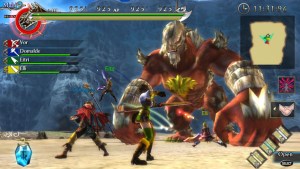
Yes, there’s not much originality in the story, but RO uses humor well enough throughout and is paced so that you really won’t gripe much about some of the more generic elements it trots out like clockwork. The gameplay borrows bits from a few action-based RPGs and core action titles, but also has a deeper combat system hat rewards more than mere button bashing. Similar to Capcom’s fan favorite Monster Hunter series, the larger bosses and some fast-moving or hard hitting (or both) normal characters can bring the pain early and often unless you’re pulling off successful combos and chain attacks. That said, combat in the Monster Hunter series is a LOT more technical and slower-paced, while combat in RO will feel more satisfying to players who want a simpler, speedier experience.
Unlike more common JRPGs, you gain no actual “levels” here and in fact, need to equip new gear or cards and complete chapters in order to see your stats increase. While this may upset some fans used to straight up grinding to take down tougher enemies and bosses with little effort, it’s actually a great way to see how each player tackles the harder parts of the the game. If you’re having trouble with the first major boss in the game, the last ones will be having you jumping up and down on your Vita (or a substitute Vita-shaped object) after your character is mashed to a pulp a few too many times. The game is going to be harder if you rush through things, pay no attention to the hints and just think enhancing your weapon or buying new gear is the only way to win.
Still, if there’s any part of the game that needs an update patch, it would be the targeting system. As you play, you’ll find that the difficulty is quite literally and figuratively all over the map thanks to areas where mobs of monsters appear and you’re trapped in a relatively small space with them until you kill them all (or get wiped out yourself). There’s an other wise functional lock-on system here, but it’s useless against larger mobs as it tends to often target faraway foes after you kill off the first one in your line of sight. You can toggle between enemies, but when there are around 20 or more in a relatively small space, it’s harder to focus on selecting targets when a few too many are in the process of attacking. It’s best to use the lock-on for bosses when you need to keep them (or the parts you need to hit) targeted until they’re down for good. For the most part, you can run in swinging (or hang back shooting) at many creatures provided you’re planning to dodge and can smack multiple enemies into the air and take them out before you hit the ground.
There’s a definite difference in each of the six classes you’ll want to try out on your own, as each has its strengths and weaknesses. Swinging a huge quick two-handed sword or slower hefty hammer both do great at decimating smaller and medium-sized foes, but those who want ranged combat, faster dash in and damage attacks, powerful magic or healing spells with a bit of bashing will all be well-served here. I actually started the game as a Hunter class and also set up a second save as a Swordsman class just to bounce back and forth between the two to see which was more effective. The nice thing is multi-classing is possible after a certain point and for those who liked Raganrok DS, the card system is back, but streamlined so that only your armor requires slotting.
Since cards appear in the field as random monster drops, heading back to some tougher maps can net you some nice cards with damage dealing elemental or other effects that can assist in taking out enemies faster. Granted, the game can be beaten without going overboard with card farming, but new players will indeed find the bosses right from the start VERY tough to deal with, particularly when playing as one of the weaker characters. It’s possible to get continually trounced until you get wise to the combo system, anticipate a monster’s moves based on watching their attack patterns and hit them before they start hurting you. While you can interrupt most creatures mid-attack with hits of your own, some larger monsters or mobs of creatures will be pure hell if they start knocking you around. Corner traps are very possible in areas where you’re suddenly walled in and need to defeat a pack of creatures in order to proceed.
Touch screen usage is nicely streamlined so that it works just about perfectly. My big fingers had not too much trouble tapping potions to use or expanding the mini-map to the center of the screen. However, during some of the harder battles I had some issues with tapping the proper potion. You can only carry a limited amount of them and can’t stack the same items in those three hot slots you get, meaning you need to go light on the healing and try to hunt down cards that boost how many HP you recover when you do heal. Playing with others helps out a lot, but the game scales up in difficulty online, so if you’re having issues in solo play, you’ll have more if there are a few players with the same issues trying to deal with what’s headed your way.
In terms of presentation, Game Arts has made a great-looking Vita game, save for some lower-resolution objects in shop screen backgrounds and a few other indoor locations. Other than those, colors are rich and there are some excellent lighting effects throughout the game. Granted, you’ll be traveling through the maps here many, many times, but all have blocked off areas that open up as more quests are taken in each chapter. The soundtrack is excellent and you can buy LPs of most tracks to play during town scenes (another nice touch) with plenty to collect as you visit new locations. You won’t hear any dialogue at all, but like Ragnarok DS, the text is often amusing and there are plenty of familiar emoticons from the Ragnarok series that fans will recognize.
Speaking of familiar emoticons, communication between online players is done using them and you can customize what’s here further to your tastes. Connecting into games was a bit dicey at launch, but this I’ll chalk up to Hurricane Sandy mucking up connection speeds here (in writing and updating this review, I’ve been booted off the wi-fi I’m using about seventeen times today) more than Game Arts and GungHo not being up to the task of making things run smoothly. As for replay value, it’s definitely here. You can create up to four profiles per game and the number of class and cross-class possibilities increases as you experiment with each character. It’s too bad you don’t have a universal storage all the characters can share, as it’s fun to trade online with live players and it would even more fun to be able to store gear so one of your other saved heroes or heroines could access those goodies.
At the end of the day, GungHo Online and Game Arts are 2 for 2 on the Vita, and that bodes well for the company as long as they continue to support the hardware with solid game experiences. Granted, getting the PS3 into the mix would be even better in the longer run, as I can see RO in some form being part of Sony’s future should enough fans want a fun MMO-like experience on a home console.

 "DESTROY ALL FANBOYS!"