

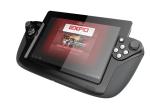
I’ll admit that when I first heard about the Wikipad earlier this year I didn’t like the name much until I realized that it has nothing to do with the popular online encyclopedia and everything to do with where the word actually comes from . It’s a good thing I’ve been to Hawaii (although that was quite some time ago). OK, I was also a bit skeptical about yet another tablet hitting the market even though this one had a unique twin analog controller attachment that turned it into a more dedicated gaming device. After spending time yesterday with the upcoming tablet and company CEO James Bower, I’d say that a handful of people not liking the name is the just about only thing he should be worried about. Wikipad is real, it runs like a dream and once you try it for yourself, there’s no way you can’t be impressed about the product. What we have here, folks is a winning combination of a powerful smartly designed tablet built from the ground up to be as good as it gets and an innovative controller attachment that opens up the tablet market to those “core” gamers who’ve been wary of anything with touch controls.
The primary problem with looking at a photograph of any device these days is you can’t tell at all what it will feel like, nor can you gauge anything save for whatever first impressions your eyes and brain toss around. When Bower took the 10.1″ Wikipad tablet out of the controller cradle and handed it to me, I was floored at how light but sturdy the tablet felt. Yes, it’s got a plain design (from the front, at least), but this is a case of function over form that works, period. At 1.23 pounds (560 grams for those of you doing the metric thing), it’s definitely the lightest tablet of that size that I’ve held. it’s also super thin (.34″) and the back of the unit has a nice, grippy coating plus a ridge that makes a great hand grip when you’re using the tablet without the controller. It was clear that the design team looked at all the tablets available when they were coming up with the Wikipad and set out to make a device that was easy on the eyes and even easier to hold onto.
That ridge also does three more important things that made me smile. I noticed the speakers on the bottom of the tablet and before I could ask about loss of sound quality on a flat surface, Bower pulled up a song from a playlist, placed the tablet onto the table and hit “Play”, whereupon I got the third of a few surprises during this meeting. The sound is pretty awesome, spreading out from the bottom of the system, hitting the table and filling the room nicely. The raised ridge keeps flat surfaces from muffling the speakers quite well. Bower also noted that it adds a bit of spill protection to the unit’s underside (something a klutzoid like me instantly fell for, no pun intended). After showing off the really cool interface choices (there are a few rotating menu choices that are really cool), it was time for a bit of actual gaming.
Under the hood, you’re getting not only a chunk of quality, it’s current tech and definitely makes for a powerful device that’s ready for some great gaming experiences out of the box. Launch units will roll out with an Nvidia Tegra 3 T30S 1.4GHz Quad-core processor as well as Android 4.1 (Jelly Bean), 1GB of DDR2 internal memory, 16GB of storage with the ability to expand that to 32GB through an SD card slot. It’s also open source, meaning the homebrew and emulation crowd will have themselves a field day should they hop aboard the Wiki train. Bower slid the tablet into the twin analog controller cradle (those grips come in handy once again!), selected Madfinger’s visually impressive, zombie-packed Android FPS, Dead Trigger and handed me the unit. The light bulb above my head that was already glowing got a hell of a lot brighter.
First and foremost, that controller doesn’t add much more weight to the Wikipad, making it just as comfortable to hold for extended periods. Second, it just feels right, with no lag at all, no fingers on the screen mucking up the gameplay and overall, a far better experience than I’ve had with any tablet shooter I’ve played. I was taking down zombies left, right and center with ease and having a blast just like I would at home in front of my TV. It really feels like you’re playing a dedicated handheld, albeit one with a bigger screen than what’s available from Sony or Nintendo. Unlike a smaller handheld, however, the larger screen and controller combo gives you the impression of a much larger TV or monitor. Sure, it’s only 1280 x 800 resolution, but the game looked sharp and ran like mercury on a slanted floor.
Although I’m not big on touch and swipe “casual” games, of course Wikipad will absolutely support anything currently available on the Android marketplace should you get that urge for Fruit Ninja, Angry Birds, Temple Run or whatever. Bower also noted that the final version of the controller will be lighter and much better constructed, so that had me looking forward to seeing and playing with the updated pad. That zero lag deal will be another selling point for some potential users, no doubt. But the better and customizable the final pad is, the better for gamers and Wikipad at the end of the day. That and some killer apps that can assuage the need for fans of those types of games to support the device. But we’ll talk about the future a bit later…
After blasting zombies for a bit, I handed the system over to Bower, who switched to a fun kart racing game and handed it back. Again, it handled as it should and it wasn’t until I put the unit down that I realized in both games, I didn’t need to remap or calibrate any buttons from touchscreen to the controller at all. I’d imagine that the more action-based or “traditional” games you’d want to use a controller for (save for anything older that’s strictly touch-based and plays better that way) will be programmed or reprogrammed to take advantage of the pad. As far as some of those more controller-friendly games go, it looks as if in addition to whatever current and future titles get controller support added, we’ll be seeing PlayStation Mobile playing a big part in delivering core controller-friendly games to the device. That purchase Sony made of Gaikai seems to have been a well-planned move after all.
Currently, GameStop is taking pre-orders for the unit, which will come with game and other content to be announced (yes, I’ll run a news item as soon as I get that info. Additionally, nVIDIA’s Tegra Zone and Google Play are on board as content partners, so you can probably expect some sort of competitive gameplay functionality (I’d bet on multiplayer FPS action at some point, but give me a good dungeon crawler and I’m there). My own wish list of titles would be to have the Infinity Blade games tweaked to use actual controls or at least see an installment made for the WIkipad, as it seems that one coming trend will be devices with controllers as part of their designs made to appeal to more “core” gamers. You’re also getting a bunch of other tablet features and expected specs that will appeal to device fans, but of course, the big bad question you’re asking yourself is one that will determine the success of the Wikipad from day one of its October 30, 2012 launch. Is the Wikipad worth $499.99 and are you getting your money’s worth?
Personally, I say yes it is on both counts. I’m old-school and can absolutely understand that new tech (particularly that with innovative features worth paying a premium for) SHOULD cost more, early adopters willing to pay a premium for new tech are often the best word of mouth (like it or not, just ask die-hard Apple supporters) and hell, nearly every great gaming trend has come out of nowhere to surprise the skeptical. Does anyone recall some of the nay-saying going on when Sony announced it was getting into the console market back in the early 90’s? I sure do. Sadly, during this current decade of cheap casual titles making tons of money in a really short period of time as well (as all sorts of divisiveness from die-hards in every corner of gaming as to what’s “best”), we’ve devalued both gaming and actual innovation to the point that when someone does make a game-changer, the jaded ones are the first to whine about paying more for something that has the potential to revolutionize things in most of the right places.
Granted, to the harder to please crowd that HAS to have its mascot games, big, open world RPGs, licensed sports games and other console top sellers, Wikipad will be a harder sell until it proves that it’s getting that content. I have the feeling there will be a few shocks and surprises on that front, but common sense dictates that you won’t be seeing anything Nintendo here, nor any first-party releases from Sony or Microsoft that have deeply established fan bases on the three companies’ respective consoles. On the other hand, I’m gathering that should the tablet sell in decent enough numbers, we could see some interesting titles coming from other publishers looking to get into the device market, but with titles using traditional and/or touch controls.
The WIkipad isn’t a toy and again, once you pick one up and hold it, it’s clear that it’s not some thrown-together piece of junk with an outrageous price tag meant to yank in the suckers with too much disposable income as it promises the world but delivers nothing but vapor. You’re paying for something that’s built from the ground up to do what a tablet does, but has the power and peripheral vision to also do what a gaming system does – and do it very well indeed. All it needs are enough people willing to take the plunge and see that it’s everything it says it is and as time passes, will evolve into a device that deserves a nicely sized user base that spreads the word bit by bit.

 "DESTROY ALL FANBOYS!"